


TL;DR:
Coconut water is a light, naturally sweet drink that is low in calories, has almost no fat or protein, and is known for its electrolytes, especially potassium. The coconut water nutrition facts below show roughly what a glass contains, how it compares with other drinks, and what to check on the label. It works well as a refreshing everyday drink during hot weather, travel, or a busy day, but it is a hydrating beverage rather than a nutritional powerhouse.
Walk down any Indian street in summer and you will find someone selling fresh coconuts. Coconut water has been a go-to refresher for generations, and today it is just as easy to enjoy from a bottle. But what exactly is it? This guide breaks down the calories, carbohydrates, minerals, and electrolytes, so you know what you are drinking.
Coconut Water Nutrition Facts Briefly
Coconut water is the clear liquid found inside young, green coconuts. It is mostly water, with small amounts of natural sugars, minerals, and other nutrients. Exact values vary by coconut, ripeness, and brand, but the approximate figures below, based on commonly cited nutrition databases, give a good picture of a typical 240 ml (about 8.12 oz) serving (about one glass).
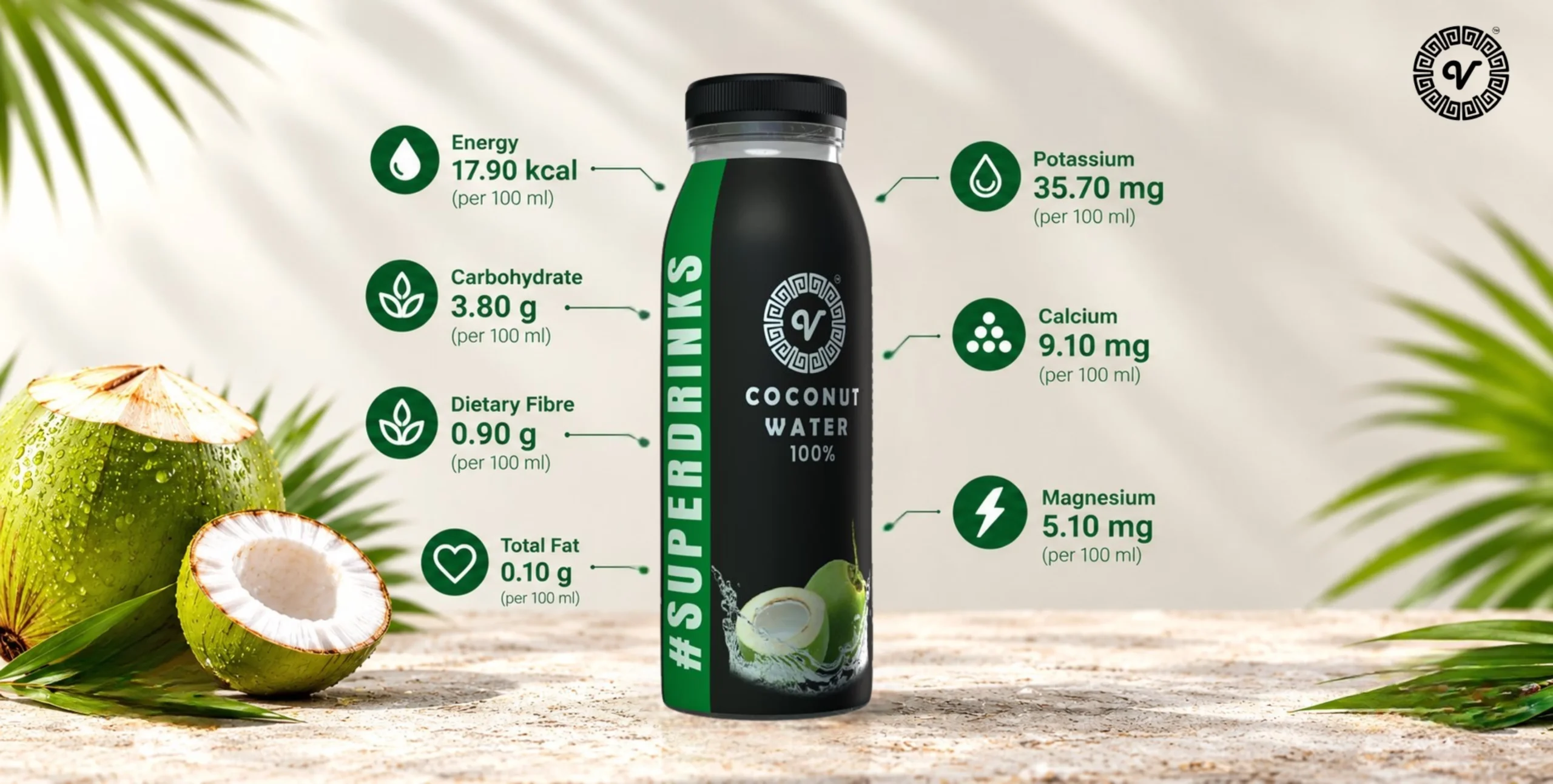
NUTRITION FACTS**
1 serving per container | Serving size: 1 glass (180 ml)
| Nutrient | Per* 100 ml | Per Serving 180 ml | %RDA** (Per Serving) |
| Energy (kcal) | 17.90 | 32.22 | 1.80 |
| Protein (g) | 0.50 | 0.99 | – |
| Carbohydrate (g) | 3.80 | 6.75 | – |
| Total Sugar (g) | 5.00 | 9.00 | – |
| Added Sugar (g) | – | – | – |
| Dietary Fibre (g) | 0.90 | 1.62 | 3.10 |
| Total Fat (g) | 0.10 | 0.18 | 0.20 |
| Saturated Fat (g) | – | – | – |
| Trans Fat (g) | – | – | – |
| Cholesterol (mg) | – | – | – |
| Sodium (mg) | 10.30 | 18.63 | 1.03 |
| Potassium (mg) | 35.70 | 64.17 | 3.96 |
| Calcium (mg) | 9.10 | 16.38 | 2.60 |
| Magnesium (mg) | 5.10 | 9.09 | 2.82 |
* Approximate values
** Calculated based on FSSAI RDA energy value of 2000 kcal
The takeaway is that coconut water is mostly hydrated with a gentle dose of minerals. It is not a protein or fat source, and it will not replace a meal. Treat these as ballpark numbers, because sodium in particular varies a lot between products.
Coconut Water Calories: Light but Not Zero
Coconut water calories are one of the main reasons people choose it over heavier drinks. A glass has roughly 40 to 50 calories (about 4 minutes of running), which is noticeably lower than most fruit juices, flavored milk drinks, or sugary sodas of the same size. Almost all of these calories come from natural carbohydrates.
That makes a easy option when you want something refreshing without a heavy drink. Yet calories will add up when you drink multiple bottles a day. Therefore, enjoy the drink by tracking the sugar intake. Because even though sweetness is natural it still adds up to your daily total.
Coconut Water Electrolytes: The Real Highlight
If one thing sets coconut water apart, it is its electrolyte content. Electrolytes are minerals that help your body maintain fluid balance, support muscle function, and keep nerves working normally. Coconut water electrolytes include:
- Potassium: The standout mineral. A single glass can supply a meaningful share of what most adults need in a day, which is why coconut water is often compared with bananas for potassium.
- Sodium: Present in smaller amounts, and it varies widely by brand. It helps your body hold on to the fluids you drink.
- Magnesium: Plays a part in muscle and nerve function.
- Calcium: Found in modest quantities and supports normal muscle activity.
In India’s heat and humidity, we lose fluid and minerals through sweat on long commutes, hot afternoons, or outdoor activities. A beverage that consists of both fluids and electrolytes can be pleasant to replenish them.
A Comparison of Coconut Water with Other Drinks
Here’s a simple way to put it along with other common drinks:
- Versus plain water: Coconut water adds flavor, potassium and a little energy. Plain water has none of these, and it is still the best everyday hydrator.
- Coconut Water vs. Fruit Juice Coconut water is typically lower in calories and sugar than most fruit juices, but juices have more Vitamin C.
- Compared to sports drinks: Coconut water has more potassium and less sodium. Sports drinks are meant for heavy sweating, coconut water for casual refreshments.
Coconut water contains less calories than soft drinks and has natural minerals while soft drinks have almost sugar.
When to Drink Coconut Water
Versatile, coconut water fits into many moments of the day:
- Morning: Get off to a good start with breakfast.
- Afternoon: A respite from the heat when it’s at its worst.
- Travel: Have a drink on long journeys when you want something lighter than coffee or a milkshake.
- A gentle way to cool off after a walk, run or light workout.
- Outdoor plans: Easy to tote along for picnics, treks or sports days.
How to Read the Label: Coconut Water Nutrition Facts Before You Purchase?
All bottles are not the same so it is useful to quickly check the label. What to watch for:
- Ingredients: The shorter the better. The list should ideally be just coconut water.
- Added sugar: Some products add flavor or sweeteners. Check to see whether the sugar listed is natural or added.
- Serving size: Compare values per 100 ml (about 3.38 oz) or per serving so you can make a fair comparison between brands.
- Sodium and potassium If you care about electrolytes, these two lines tell you the most.
- Calories: If the pack has more than one serving, check the calories per bottle, not just per serving.
In seconds, you can glance at the label and know exactly what is in your bottle.
Coconut Water from SuperDrinks
SuperDrinks is a Pune-based Indian beverage brand built around convenient, ready-to-drink options. Coconut Water is part of the juice lineup, positioned around the naturally familiar taste of coconut water. It is a simple way to enjoy a light, refreshing drink during everyday activities, travel, or outdoor occasions without any preparation. For exact nutritional values, always refer to the nutrition panel printed on the bottle.
Final Thoughts
Packaged coconut water is a hydrating, low-fat drink with natural sugars and a good mix of electrolytes, particularly potassium. Understanding coconut water nutrition facts helps you enjoy it for what it is: a light, flavorful alternative to heavier beverages. Pick a bottle, check the label, and enjoy it whenever you want a refreshing break.
FAQs
- Is coconut water healthy for you?
Coconut water is low in fat and calories and contains natural electrolytes such as potassium. It can be a refreshing addition to a well-rounded diet but should complement – not replace – plain water and a varied diet.
- How many calories does coconut water have?
A 240 ml (about 8.12 oz) glass typically contains 40-50 calories (about 4 minutes of running) depending on the brand and whether sugar was added.
- Is there electrolytes in coconut water?
Yes. ” The electrolytes in coconut water include potassium, sodium, magnesium and calcium with potassium being the most abundant.